Wednesday, November 11

'City Moms' Fall Harvest and Beef Farm Tour

With celebratory rides on combines the 'City Mom'
2015 tour season comes to an end.

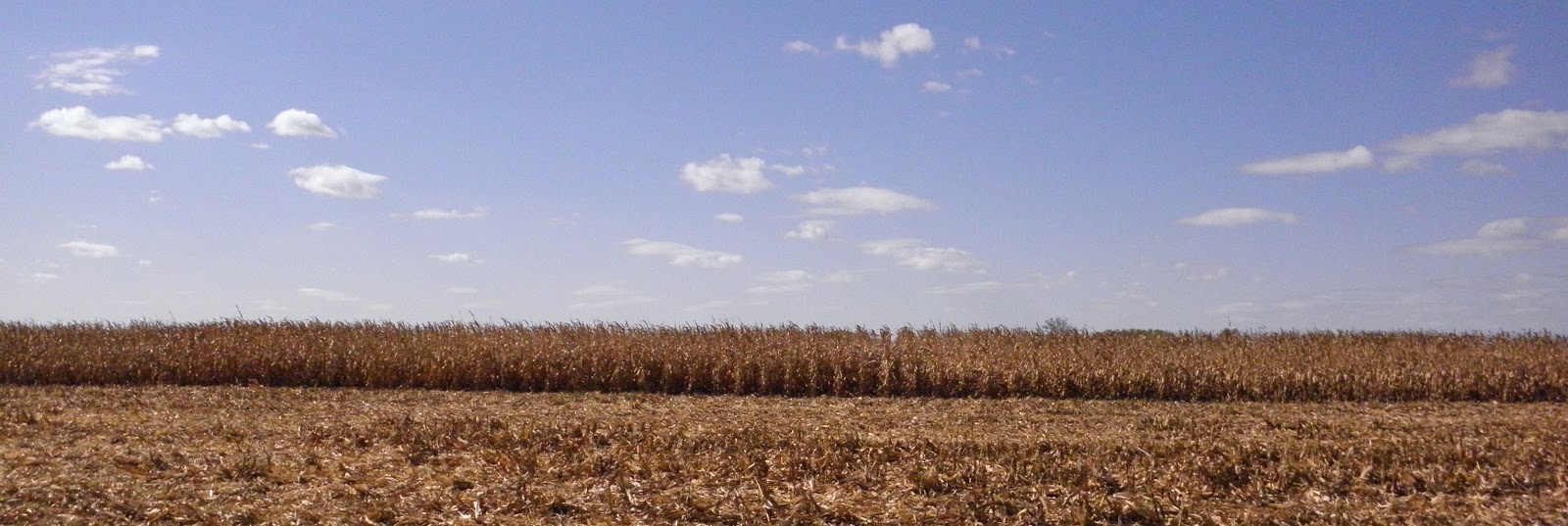
The Illinois Farm Families 'City Moms' went on the last of this season's farm tours in October. Despite my increased awareness of the extensive winter work that continues behind the scenes, every year, on every farm; from my perspective as a city mom, we ended the season appropriately, with a harvest tour.

Invited to complete our season with the opportunity to ride in the combine and the grain wagon, this was an exciting and somewhat celebratory tour. I am sad to see the season come to an end. We have met so many amazing Illinois farm families. I've had such a good time and learned so much on each tour, much more than I've yet been able to integrate completely into my food purchasing, preparing and serving of meals to my family.


The Larson Farm


Our last tour was of the the Larson Farm in Maple Park, IL. The Larson family farm produces beef and grain. Three generations participate in farming on the Larson farm. Mike and Lynn Martz partnered with Lynn's parents in 1979. Their son Justin and his wife joined them in 2008. Several employees contribute to farm operations and are an integral part of the farm. With several generations represented in the family and inter-generational employees on the farm there is a strong sense of extended family and community overall at the Larson farm.

Larson Farms

The crop production side of their farm is managed by Lynn and includes corn, soybeans and wheat grown on 6,350 acres of land. They also raise and finish beef cattle, Mike's domain. They have the capacity to house up to 3,500 head of cattle and finish 7,000 head each year. These cattle are delivered via semi-truck to the Larson feed lot where upon arrival, they are allowed ample time to rest and recover from the stress of travel. The feed lot houses and cares for the animals of other farmers and finishes them for the market.

Animal Well Being


Every animal is observed on a daily basis at the Larson farm. Technology contributes to the assessment of each animal's well being and development. Ultra-sound technology is used in determining fat content, marbling and readiness for the market. Facilities for the cattle on the Larson farm were designed by the well known consultant to the livestock industry, Temple Grandin.


Antibiotics are only used on sick animals and following any antibiotic treatment, there is a required withdrawal period before that animal can be taken to market. There is oversight and inspection by government regulators and ample testing required to insure that there are no residual antibiotics in the meat. Mike Martz also presented information regarding the use of hormones in beef production. Hormones naturally occur in cattle (and other organisms). Any additional hormones are given to assist an animal in utilizing their feed to promote growth. A farmer may choose to use additional hormones to improve efficiency and reduce the environmental impact of raising cattle. Useful comparison information regarding hormones to consider includes the fact that a 3 oz. cut of treated beef contains 1.9 nanograms of estrogen compared to 1.3 nanograms in a 3 oz. cut of untreated beef (that's a .6 nanogram difference), a potato contains 225 nanograms, a 3 oz. serving of peas contains 340 nanograms, a 3 oz. serving of cabbage contains 2,000 nanograms and one birth control pill contains 35,000 nanograms of estrogen. (Source below.)

For the source and more information regarding the specific amounts of naturally occurring hormones, please read the article from the University of Nebraska: http://newsroom.unl.edu/announce/beef/2846/15997

Back to the Farm


There is an amazing amount of work to be done and managed on the Larson farm. Our visit coincided with the fall corn harvest. We rode on the combine on the 27th day of consecutive 15 hour work days for those driving the equipment. Despite the timing, we were met with enthusiastic and talkative field guides as we watched the harvesting of the corn from the combine cab.

To get your own glimpse into work and life on the Larson farm, view the video;
https://www.youtube.com/watch?v=_f3dmiorenU


http://www.larsonfarms.com/#!city-moms-2015/p5br6

So Much to Learn


We have been presented with so much information and have had the opportunity to have an inside look at farming on each and every farm tour that it is hard to readily absorb and process it all. Visiting the Larson family farm was no exception and we were once again treated with warm hospitality and straight forward honest answers to every question.

For me the big picture takeaways from the Illinois Farm Family 'City Moms' tours were:

  • Illinois Farmers are dedicated hardworking people with the best interests of their land, their animals and their consumers at heart. 
  • They offer high quality products to consumers. 
  • They care. 
  • They are regulated. 
  • They respond to the market.
  • They want consumers to be healthy, informed and to have choices in their food purchases.

The Illinois farmers we met this season are committed to informing consumers about farm production. They have been more than generous in sharing their time, knowledge and their farms with us.


Whether it is through a program like the one offered by Illinois Farm Families, by visiting your local farmers market or just asking questions of the managers of the grocery store where you shop, I urge you to find and get to know the farmers who produce your food. You will increase your knowledge about the food you eat, gain confidence in your purchasing choices and meet amazing people.


Tuesday, October 27

Pumpkin Poem and Cheese Cake

Pumpkins
Orange, big, small
Pumpkin pie cooking
Seeds are good to eat
Vegetable

By, Kayla

Ms. Butler's Class
Dry Creek Elementary
Port Angeles, Washington
Assorted Poetry


I love this time of year.
The rich colors of the harvest promise flavor and comfort, plus a good dose of healthy nutrition.
This cheesecake is a delicious reward to share with your loved ones. 


Pumpkin Cheesecake


2 Graham Cracker Crusts
(I use pie pan shape, sometimes I make them: recipe below, sometimes I buy them pre-made)

1 small pumpkin 1 3/4 cup pulp
 or 1 can pumpkin (15 oz.)
1 lb cream cheese
1 cup maple syrup
2 eggs
1/2 cup whipping cream
1 teaspoon black strap molasses
1 Tablespoon vanilla extract
1/2 teaspoon cinnamon
1/2 teaspoon powdered ginger
a pinch each of allspice, ground cloves, nutmeg

Beat softened cream cheese until smooth.
Mix pumpkin and maple syrup.
Add to cream cheese. Mix.
Add the rest of the ingredients. Mix.
Pour evenly into crusts.
Bake at 375° for about one hour.
Allow to cool and refrigerate for several hours before serving

Graham Cracker Cheesecake Crust


1 package (1/4 lb.) graham crackers
1/2 cup butter

Make crumbs of the graham crackers in a food processor.
Melt butter.
Mix with crumbs.
Press into pie pans.
Bake at 375° for 5 minutes.
Let cool before filling.


And of coarse, there is always the option of creating a pre-baked pumpkin master piece. Happy Halloween! 


Sunday, October 18

Heritage Food In Our Family - Rosolje - Beet and Potato Salad

We have so many ethnic food choices in the USA.  At any given meal, we can eat cuisine with influence from almost anywhere in the world at a local restaurant. We can eat take-out of almost any kind and most of us know at least a recipe or two to cook up in our own kitchen that isn't originally from our own ethnic background.

My husband, Avo, is Estonian. Both of his parents immigrated to the USA following World War II. His first language was Estonian, his early years were spent in a thriving and tight knit Estonian community in Chicago. As in most ethnic communities, opportunities to get together included traditional food.
Estonian Flag

One Estonian side dish that I delight in is Rosolje [row-sohl-yeh]. My appetite for Rosolje may be one of the little things that contributed to my change of status from out-law to in-law in my husband's family. I love this salad. I consider it a complete meal in itself. It contains all kinds of wonderful and nutritious goodies; pickled beets, apples, dill pickles, and sour cream, meat and eggs for protein.

When I've questioned my mother-in-law about the origins of Rosolje, she shrugs with the common response of someone being questioned about their own cultural traditions "It's just always been there. My mom made it, then I made it." Too familiar to question, we had to do a bit of research to learn the history.

Traditionally served in the fall, you may also find this amazing salad at any gathering, including the summer solstice, Jaanipaev celebration. Rosolje became popular in the 1920's, originally made with herring (common Estonian fare), it has evolved and each cook adds the meat of her choice. The measurements of each ingredient were hard to pin down, even the published recipes vary in individual amounts per ingredient. When I make it, I have done the same and fortunately, my results have been given the nod of approval from both my kids and mother-in-law, from where I was gifted the recipe.
Thanks, Tiina.

Here's the recipe.
Rosolje - Serve cold.

Cube the following ingredients:
2 cans of pickled beets (Aunt Nellie's) Save the juice.
5-6 dill pickles
4 apples (Granny Smith or Golden Delicious)
6 big potatoes - boiled and peeled
3 hard boiled eggs
Cooked cold meat - cooked cold pork roast, smoked turkey or smoked ham are a few of the possibilities. I use ham and have never tried it with the traditional herring. Cube about 1 - 2 cups.


Get some help for cubing (it takes awhile). The expert Estonian cooks say, whatever size you cube the ingredients into, to try to get all of the cubes the same size.

For the dressing:
1 1/2 cups sour cream
1 1/2 teaspoon dry mustard (Colman's)
Add beet juice until you have the desired pink.
Mix it all together. Refrigerate for several hours.
Serve cold.
Mix dressing to desired pink.


Handing down a traditional recipe.
Adah and Grama Tiina.


This recipe shared on Creative Muster.

Monday, October 5

'City Moms' Dairy Farm Tour Highlights


Dairy farming educator extraordinaire,
Linda Drendel talks about the farm.
Brian J Gerloff, DVM
Gracious and generous hosts, Linda and Dale Drendel welcomed the Illinois Farm Family 'City Moms' to their farm to share a bit of their extensive dairy farming knowledge with us. With 40 years of dairy farming experience, they have more to share than we could possibly absorb in our afternoon visit. Linda talked about their champion Holstein cows and the meticulous care given to their animals. She is passionate about dairy farming and the well being of the cows.
Brian shows us feed for the cows.


Beautiful weather for a farm tour.

The Holsteins on the Drendel farm are monitored and cared for regularly by veterinarian Brian J. Gerloff. Brian has years of experience with dairy cows. He grew up on a dairy farm and began his vet practice caring for dairy cows in 1985. He has witnessed the number of dairy farms in Northern Illinois decrease substantially since he began his practice.


Brian showed us the feed and described how feed is selected for the best nutrition for the cows. What I remember is that a totally mixed ration (TMR) is created to address the nutritional needs of the dairy animals. One of the ingredients is made from the whole corn plant (corn silage), another ingredient is hay. Another fun fact is that cows have four stomachs.


Despite the lovely weather on the day we visited, the cows chose to stay inside. There was an open gate on the side of the barn for them to exit at will, but they remained in the barn. Silly cows.


Beautiful baby cow.

Seeing the young ones of any species is usually a treat. The calves were all really beautiful, each with their own distinct markings. They were also generally very friendly.


Born to latch on.
Baby mammals are born with the survival instinct to suck. These calves will be fed their mother's colostrum and milk, but long term, they will not be getting their nutrition directly from the cow themselves. A calf will be separated from the cow approximately 6 -8 hours after birth due to safety concerns.The cow can pose a physical danger to the calf by her size and potential for laying on the calf. A calf in open pasture can wander off and get itself into trouble. The separation of the calf from the cow, also allows for better monitoring, by the farmer, of the health of the calf and it's food intake.
I'm a lactation consultant,
but this was a whole new suck assessment.


Each of the 'City Mom' farm tours has been a delight for me. With the opportunity to meet the farm families, each tour has served as a reminder of just how easy it has become for most of us to buy and consume safe, high quality nutrition for our families. I am grateful for the hard work and dedication of the farmers that goes into making such a wide range of healthy food available to the rest of us.

The fun continued discussing the dairy tour on radio.


Following the farm tour, I  had the opportunity along with Marla Behrends, from the Midwest Dairy Association, to join radio hosts Rita Frazer and DeLoss Jahnke on R.F.D. Illinois radio to share my experience as a 'City Mom' visiting the Drendel farm. Thanks, Rita and DeLoss, fellow Runza fan, for the opportunity, it was a pleasure talking with you both.


For a lovely cookbook with great recipes containing dairy, plus a brief introduction to the different breeds of dairy cows, checkout; A Dairy Good Cookbook edited by Lisa Kingsley.


Wednesday, September 23

Second Language Learning - Family Unit Study

As a homeschooling mom, I kind of think of our whole life, as a family, as one big unit study.
A few of the ongoing study questions for the (not)quiz are;
How do we best live our lives?
How do we contribute to the well being of the lives of others?
How do we provide for ourselves?
What is the next set of skills I need to develop to accomplish?..... whatever the next goal is.

Yes, I'm a big picture person, but the big picture often leads into very interesting nooks and crannies. For example, like many others, one of my big picture ideas is that it is important to be aware of other cultures and understand that there are many countries, languages, customs to experience and understand to some degree. That idea has led us to hosting an exchange student this year.

Our exchange student is from Mexico and is the same age as my home schooled daughter. She attends school, but her presence in our family is influencing my homeschooling choices with my daughter. Her presence is also influencing my daughter's personal study choices. She has, as a result of more personal and direct exposure to the Spanish language, been more diligent about her own daily study and practice of Spanish.

For a teen, there's nothing quite like seeing someone of your own age be proficient in two languages to shine a little light on your own deficiency. My children are seeing first hand the usefulness of being bi-lingual. They are also becoming acutely aware of the need to use and speak a second language on a daily basis to become a master of it. Observing our student's process and progress in the English language is enlightening.

We are all adjusting to our new situation and learning not to take for granted what someone else experiences or understands or needs. We are all experiencing first hand the differences in how we each see things and how each of our view points have developed out of different cultural backgrounds. My children are seeing how our culture and life circumstances influence how we see things, what we expect and what we assume. We are all learning not to take too much for granted in our expectations. We are developing a deeper sense of the importance of communication between individuals, how cultural assumptions can lead to misunderstandings and also how reaching out to understand our differences can enrich our lives.


Friday, September 18

Last Days of Summer


“All in all, it was a never-to-be-forgotten summer — one of those summers which come seldom into any life, but leave a rich heritage of beautiful memories in their going — one of those summers which, in a fortunate combination of delightful weather, delightful friends and delightful doing, come as near to perfection as anything can come in this world.”
                                               L.M. Montgomery, Anne's House of Dreams


We have had a wonderful summer. Beyond the regular summer routine of work, at the Reading In Motion office for my husband, continued classes at summer school for our oldest and continued practices of baseball and gymnastics for our aspiring athletes; there were days of tournament baseball, there were mini family outings, (the city, the dunes, the zoo), weekend trips and one longer vacay. There were opportunities to enjoy friends from both near and far. There was fun with local friends, visits with dear long time friends from Germany and new friends from Mexico. Many just plain ol' good times together.

It's hard to give in and give it up.

So here's a few photos in honor of letting go, savoring the last few days of summer and looking forward to the new season to come.


Enjoy the last lovely days of long light!


Friday, August 28

Homeschooling. It Is Worth It!

As a homeschooling mom, I can see my "teacher" days dwindling toward the end.  My children have entered into the bigger world, each at their own pace and based on their own interests. They are finding their way, having experiences and successes of their own.  They continue to have our support, they know we are there for them and though they continue to operate mostly in the context of their first social group, our family, it is their own paths, they are beginning to blaze.
With one son in college, one son, attending public high school (his choice) and my daughter, my youngest, still homeschooling, even though I’m not completely "done" homeschooling, I find myself reminiscing and reviewing.  As I recount our experiences every look back ends with great gratitude for having had the opportunity to homeschool.  I can say with certainty that it is worth it.

No regrets.


I have to admit as I look back it doesn't seem like we really made many sacrifices to homeschool. The biggest sacrifice was probably made well before we decided to homeschool when we choose for me to be an at-home-mom and we gave up a second income.  Viewed as coming with major sacrifices or not, the choice to homeschool does involve some level of compromise.  We have remained a one income family much longer than we originally planned due to the educational choices we have made for our children.  We are still living that compromise and yet, even with the constant financial catching up, I have no regrets.

When I was a college student myself, a professor once shared his thoughts about regret; he related his wisdom, and it stuck with me. He said, "It's not the things we try that we regret but the things we don't attempt".  That is certainly true for me as a parent with homeschooling.  If we hadn't decided to be our children's primary educators, I know it is one of the things I would have always looked back on to wonder, what if?

Reading everyday.

There were many days, when my oldest was high school age, I questioned our decision.  I often verbalized my doubts to my husband.  He however, always remained solid about our decision, the benefits and what we weren't missing out on.  He was certain that what our children were experiencing was far more valuable then what they might be missing at the local public school.  I wasn't always so sure, until, our second son made the choice to attend our local public high school.  Now I have NO doubts. (That's another post for another day.)

During my middle son's freshman year attending school, my daughter missed him terribly. They had, until then, always spent a significant amount of time together.  His school attendance cut into that time and it was a hard adjustment for them both.  I remain grateful for the time they shared prior and the relationship they developed.  Sibling closeness has been one of the beautiful benefits that our family has derived from homeschooling.

When asked, is it worth it? My answer is a resounding; Yes! 


Every moment shared has been a gift of love, bonding and memory making that would have been made more difficult to obtain had they all been attending school every day.  Our days have been full and rewarding and productive and sometimes not so productive.  We have played and worked and learned. We have lounged and found excitement in new topics.  We've been bored and discouraged and enthusiastic again. We've cooked and cleaned and laughed and cried. We have ice skated at rinks during noon open skates and in our own backyard.  We have had daytime dog walking jobs and paper routes. We had snow days and cozy read aloud days.  My children created games and "art" and relationships with one another through hours spent together daily.  It wasn't always fun and games or stress free but there was always joy.

Pets enjoy homeschooling, too.

I can't say that there was just one moment of realization that homeschooling was the most wonderful blessing and was worth it, but I can say, seeing two young men growing into responsibility with the ability to think for themselves, is overwhelmingly satisfying.  Watching my daughter daily as she blossoms and takes on amazing challenges as an accomplished athlete is awe inspiring. They are each unique and wonderful people.  It has been a wondrous blessing to have so many moments both momentous and mundane together with each of them. They are each a joy and have been since day one.


Homeschooling is worth it, just for the joy of it!


Tuesday, August 11

Asher at Bat - We Encourage Our Kids to Participate in Organized Youth Sports

There is a wide range of available opportunities in our current culture for organized youth sports. There are as many sports as there are kids to play; as many games as there are days in summer, fall, spring and winter. There is baseball, lacrosse, badminton, gymnastics (several kinds), track and field, soccer, hockey, volleyball and I'm sure plenty more I'm not even aware of. In each, there are varying levels at which to participate.

There are community leagues; parents volunteer to manage, coach and assist with administration. Often associated with national organizations, many communities give these groups priority for field time and park access. Little League Baseball and American Youth Soccer Organization are just two examples.

In some communities there are park district leagues; anyone can sign up and everyone plays. Organized and administrated by local city parks and recreation departments these leagues often hire young adults to assist with teaching and coaching.

There are travel leagues and travel teams; in some cases, there is still parent coaching and managing. Though in these leagues, it is more likely there will be a privately hired coach. Training for the players on these teams is usually more intensive. Some of these teams will require try outs, others won't. These are basically club sports that are private. Participation in competitions is administrated through a larger organization. USA Gymnastics for gymnasts is an example.

And in the good ol' USA.
There are school teams, some where everyone plays and some exclusive. On the exclusive school teams, coaches choose players based on skill and ability already achieved and demonstrated at try-outs. Some school teams will include training and skill development, but don't count on it. Some school sports are not available to everyone.

Whatever level of participation you choose for your young athlete, there are fruitful experiences to share.

Benefits for the athletes:
  • Productive, keep busy activity
  • Social time with a purpose
    • Family involvement and activity
      • Parent and son/daughter time
        Many life lessons including:
        • Being a part of a team
        • Learning about, how to handle competition
        • Learning what it takes to achieve excellence
        • Learning to work with others
        • Learning to encourage others
        • Learning to find appropriate mentors

        Competition


        Bring up the topic at any adult event where parents are present and you will hear plenty of arguments for and against the competition inherent in sports participation. The fear and trepidation regarding the competitive nature of sports has actually become one of my reasons to encourage participation. Our world is saturated with competition and  based on what I know about human nature, it's not going away anytime soon. So let's dive in and wrestle with it. Let's be in the process of understanding it with our kids. Let's not just throw them in on their own and pretend that if we only choose the right activities (art & theater) for them, they won't encounter it.

        Parents and coaches can (and should) have ongoing conversations about the games they are a part of and the competition involved. Listen to your young athlete's impressions and understanding. Don't make assumptions about what it means to them. Usually they have deeper understanding then we know.


        Keep Talking

        Consider exploring for yourself and with your athlete some of the following questions:
        What is your goal for today's game or practice?
        What skill do you want to practice to improve?
        How can I help my teammates?
        How can I contribute to my team?


        One Example From Our Experience
        Little League also offers suggestions

        Our son, Asher, by his own choice, began playing   T-Ball at the age of five. Having watched his older brother play countless games already, Asher was an astute player when he first took the field. The rules of T-Ball were to him, unfortunately dumbed down. On one occasion, riding home from a game he talked T-ball rules. Angry and indignant to the point of tears he recounted a play that involved his impressive throw to first base. The throw beat out the runner but to Asher's dismay, the runner was allowed to stay on base. The meaning to him was that his effort wasn't acknowledged. To him the rule change negated the effort of his throw. Explaining that each player comes with different levels of skill and knowledge, especially at that age, was important. However, the experience reinforced for him the desire to gain skills to move on to experiences with more competition, not less.

        Whatever level of participation you choose for your young athlete, there are fruitful experiences to share. Staying involved and active in sports can be worthwhile. There is learning and growth to be enjoyed at the gym or on the field for every family member, just keep connecting to one another and Play Ball!


        Monday, July 27

        Set You Own Goals


        She was determined.
        My daughter's USA Gymnastics (USAG) 2014-2015 season is over. It was a good one. She succeeded in accomplishing the goals she set for herself. One of the many keys to her success this season, was that she set those goals for herself. Determined to secure her place at a national meet, she went to every practice with her goal in mind and continued the hard work on specific skills and the overall conditioning required.

        In gymnastics anything can happen. Athletes spend hours in the gym perfecting skills only to be burdened by an injury at the time of an important competition. It is an extremely demanding sport that takes perseverance in the best of circumstances.

        After bowing out of travel to Florida for a regular session meet, I assured Adah that if she qualified, we would do whatever we could to get her to the Eastern National meet in Florida.


        Adah competed in 5 meets in the regular season and at the State Championships. There she qualified for the USAG Region 5 Championships. She finished at the regional competition with her mission accomplished; qualifying for Eastern Nationals.

        Love those post competition smiles!
        Adah's participation in the Eastern National meet provided her with the reward of accomplishment and both of us with the exciting opportunity for a mother daughter trip to Kissimmee, Florida. We had a great time exploring a bit of Florida together. And I achieved one of the goals I set for myself this season, quality bonding time with my growing daughter!

        She took me up on my promise and turned it into a trip to the beach!
        Watch her routines here.

        Friday, June 19

        I'm a 'City Mom'

             Early this spring, I became a participant in a unique Illinois Farm Bureau program. Developed to introduce non-rural families to agriculture and educate them about farming practices in Illinois, urban and suburban dwelling moms are recruited to participate and have the opportunity to tour several Illinois farms over the course of the season to see firsthand how crops and livestock are raised. Sponsored and coordinated by the Illinois Farm Bureau and Illinois Farm Families, tours are hosted by Illinois farmers and include presentations by a variety of agricultural professionals.
             
        Previously referred to as ‘field moms’, participants have been given the new and appropriate title of 'city moms' this year. When I was contacted with acceptance into the program, I was delighted. I was also a bit surprised by my new title. Despite having lived all of my life in cities or suburbs, I've never really considered a city label for myself. Something about growing up in Nebraska just one generation removed from the farm, I suppose. So even my initial acceptance and participant title in the program has had me re-evaluating some of my own views; despite my love of and desire for more time in the country, I am a life-long city dweller.
             
        As one of the "city moms" I have the privilege of touring Illinois farms with the group. During each tour we are presented with information regarding the farm itself, what products are produced there and given an overview of farming practices and techniques that are employed in the production of food by the hosting farm family. Each tour has included information presented by the farm family members and by other professionals involved in the agriculture industry.  Presenters have included; dietitians, farm bureau representatives, industry representatives and most meaningfully, Illinois farmers themselves.
             
        We have been given an abundance of information and food for thought.  It is clear that there is a lot more going into every decision and practice that occurs on each farm than can be communicated in a short sound bite or one blog post.

        A few of the facts about farming in Illinois that have stood out to me include:


        • 97% of farms in Illinois are family owned.
        Many are incorporated, like other family owned business'  for legal purposes, but continue to be family owned, farmed and operated, often with many extended family members joining in.


        • Cook County has a farm bureau.
        This was really a surprise to me. Cook County, Illinois actually has 8,499 acres being farmed on 127 farms.


        • Illinois is a major producer of pumpkins.
        I love knowing the ingredients for my favorite fall recipes are locally grown.


        Other general farming information new to me:

        • USDA certified organic does not mean raised completely pesticide and chemical free.

        • The use of GMO seeds reduces the need for the use of pesticides by the grower, actually improving the health of the soil and safety for the farmer and consumer.

        • Farmers continue to produce what the market demands.

        • Farmers have a wide variety of choices about the practices employed on their farms.

        Sweet corn in a no-till field.


        Nick Saathoff, 4th generation family farmer and ‘city moms’ tour host, farms the Meyer- Saathoff farm with his wife, Missy, three children and extended family members. They gave examples from their farm.  Nick plants both GMO and non GMO corn.  He also plants both sweet corn and feed corn. He explained his use of GMO seed and some of the benefits of using it, including the reduced need for pesticides on the GMO crops. He has no reservations about using GMOs but he is making the extra effort to plant non GMO corn, which adds to his many farming considerations, including keeping those crops separated. He plants both because there is a market demand for both crops. Farmers, like any family business, respond to the market to continue to be an economically viable enterprise.


        • Farmers choose viable (reproducible and sustainable) options for making a living and continuing to do so. 
        The farmers we’ve met have communicated their deep concern for the land.  They care about the land and the soil. They have to consider the costs of production and maintaining the means of that production. They cannot use chemicals indiscriminately on their crops because they depend on the continued health of their fields for production. They have to consider the costs to themselves and their land to stay in business. 

        • Farmers use advanced technology to assist them in food production.
        Despite at times, having a bit of a techno phobia myself, and despite believing myself to have an excellent sense of direction, I love my GPS. Living in a large urban area it is nearly impossible to know the names of all of the surrounding suburbs, finding ones way to new locations sometimes requires an extensive atlas. Enter GPS technology - I can find my way to a new destination more quickly and so much more safely. Farmers take the use of this technology a few steps further. They use GPS systems for soil evaluation and planting. Theirs GPS system provides details about their fields and landscape equivalent to us having a system that could inform us of a newly developed pot hole on the streets of our daily commute. Smart farming.

        Farming is a unique business with only 2% of the population still farming nationally, farmers are unique business people with a myriad of concerns and considerations.  A farm family in 2015 has to consider; soil health, technique choices, advanced technology and market demands.  Along with all of these practical considerations there are the intangibles.

        Nick
        Nick's son

        As Nick puts it, "The farm is more than land and crops.  It is our family heritage and future."
             
        The Illinois farm families hosting the city moms program are communicating that sentiment. They are sharing their concern for that heritage and allowing us, to see firsthand how that concern influences their livelihood. Regardless of the number of generations we are removed from the farm, we all continue to be connected to the land by the food we eat. 'City Moms' are developing a deeper understanding of the work and the heritage, our connection to it and each other.

        Wheat